Showing posts with label Italy. Show all posts

Friday, March 31, 2017

Barzio - My Mother Native Place

Barzio is a comune in the Province of Lecco in the Italian region Lombardy, located in the Valsassina about 60 kilometers northeast of Milan and about 12 kilometers northeast of Lecco.

http://teresadominici.weebly.com/
Painting by: Teresa Dominici, Title: The village of Barzio, year: 2013, acrylic on canvas, commission.

Barzio lies in privileged position, dipped in the green and in front of the Grigne. Currently the town is considered the touristic center of the Valsassina and offers different opportunities to the sporting people. From there starts a cable-way, that leads to the Piani di Bobbio (2150 m) and the Valtorta an area that in the winter season is a paradise for snow lovers with its always snow-clad trails, while in the summer it’s the ideal destination for a relaxing day surrounded by nature.

Right at the foot of the cable car Artavaggio, you will find Bar-Ristoro Capriolo, Via Rancilio 29, Moggio, tel: +39 342 008 3280. This place is magnificent, thus the 5 star rating. From the time you enter until you leave, you get a true mountain ambiance, very family oriented, homemade food.

https://it-it.facebook.com/BAR-RISTORO-CAPRIOLO-109355662424655/
Bar-Ristoro Capriolo, in winter
Inside the restaurant one of the room


LECCOMOUNTAINS the beauty and the wildness

Title, Video, Link & Below Text By

 I Ragni di Lecco - Arrampicata Alpinism Climbing

IL GRIGNONE, LA GRIGNA, IL LAGO DI COMO VISTO DALLE MONTAGNE

LAKE COMO
GRIGNONE
GRIGNA
FASANA

Episode 1 of #leccomountains video
Producer: Camera di commercio di Lecco
Project: Ecosmartland.it

Episode 1 of #leccomountains , a lab belonging to Ecosmartland project, which has the purpose to offer an integrated proposal, based on the Eco vision, to promote Lecco' area, giving the proper value to Mountains, Innovations, Culture, Technoliogy
The beauty and the wildness", il primo video di #leccomountains, è dedicato alla bellezza, che nel territorio montuoso di Lecco si genera dal forte contrasto fra lago e montagna, con valloni impervi che d'inverno assumono vesti ora gentili negli altopiani, ora severi, come in Grigna, Grignone, Fasana e Val Biandino. Bastano poche decine di minuti per trovarsi in una wildness che circonda Lecco con paesaggi che suscitano stupore e meraviglia.

In quanti luoghi un centro cittadino è così immediatamente a contatto con la montagna?

Cameramen: Pietro Bagnara, Riky Felderer, Fabio Palma, Yuri Palma, Luca Passini, Giovanni Pivetti
Script: Yuri Palma
Editing: Yuri Palma
Visual effects: Yuri Palma
Assistant Producer: Fabio Palma
Music: The way, Lantau


EMOTIONS - LECCOMOUNTAINS ep. 2 by Yuri Palma

Link: https://www.youtube.com/watch?v=KVLB_Kl6Thc&t=0s

Monday, January 18, 2016

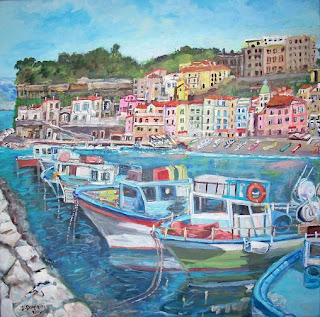
Port of Marina Grande

Sorrento is a town and Comune in Campania.


This is Sorrento’s largest harbor and has long been home to a fishing fleet of traditional wooden boats. 

http://teresadominici.weebly.com/
Painting by: Teresa Dominici, Acrylic on canvas, 25"x25", (63x63 cm), Year: 2014, Title:  Port of the Marina Grande in Sorrento


Marina Grande is a small traditional fishing port that sits underneath the limestone cliffs on which the old town of Sorrento is perched.

Port of the Marina Grande fishing was the main source of living of the people in this town. Today, fishermen can still be found in Marina Grande sitting and mending fish nets with their bare hands.

Despite its name, Marina Grande (large marina) is actually the smaller of Sorrento’s two main harbors. It is also the older marina.

Italy's Amalfi Coast 

 Title, Video, Link & Below Text By

Rick Stevens Europe

 https://www.ricksteves.com/

In this program, we explore Sorrento's back streets, taste traditional Italian food, drive along the dramatic Amalfi Coast to catch some breathtaking scenery, learn the history behind the tourist shops of Amalfi, stroll in the shadow of Greek temples at Paestum, and sail to the Isle of Capri to enter the fabled Blue Grotto.

© 2006 Rick Steves' Europe


Wednesday, November 19, 2014

Scilla, Calabria

Scilla is located close to Reggio Calabria.  

Scilla is a small town and the main attraction is the beach front. This part of town has plenty of restaurants, cafes, hotels.

The most visited location in Scilla after the beach is Ruffo Castle. The castle is built on a high cliff looking over the imposing rocks and the azure waters of the sea.

Painting by: Teresa Dominici, Acrylic on canvas, 20"x24" (50x60 cm ), Year: 2013

Chinalea, neighborhood located north of the town, is a tiny fisherman village, plenty of local fishermen live in this part of town and this area is characterized by narrow streets that are lined with small charming houses.

Scaro Allagio is another place in Scilla, where the fishermen anchor their small boats and at sunset the view of the Scaro Allogio is really  beautiful.

Magnifica Calabria - Documentario
Title, Video, Link & Below Text By
Giuliano Di Bliasi
http://www.giulianodiblasi.com/

Un dettagliato documentario sulla Regione Calabria.

"A detailed documentary on the Calabria Region by Giuliano Di Bliasi".

Scilla is located close to Reggio Calabria which is very well connected to the cities in the region as well as to many destinations in other parts of Italy. - See more at: http://www.lifeinitaly.com/tourism/calabria/scilla#sthash.gg2VuTcg.dpuf


Friday, December 13, 2013

Enjoying Portofino

Portofino is a picturesque, half-moon shaped seaside village with pastel houses lining the shore of the harbor. Portofino has shops, restaurants, cafes, and luxury hotels.

Portofino sits on a peninsula in the Tigullio Golf east of Genoa in the northern Italian region of Liguria.
Portofino is part of the Italian Riviera.

Portofino's typical architectural style adds to the beauty of the town. Most of the buildings are painted in bright colours, including red och-re, green and yellow, and accentuated with decorative frescoes. 

http://www.etsy.com/shop/dominicistudios
Painting by: Teresa Dominici, Acrylic on canvas, 18"x24" (45x60 cm), Year: 2013
From the harbor, it is a good climb to the Castello di San Giorgio, it is a medieval building , but was restored in the 16th century. "The view is superb". 
Castello Brown sits on a hill above the village. The medieval castle became the residence of Yeats Brown, British consul to Genoa, in 1870. Inside are furnishings and pictures belonging to the Browns as well as photos of many famous visitors to Portofino

On the way to the castle you can visit  San Giorgio Church, rebuilt after the last war. You can also visit the lighthouse, faro, on Punta del Capo.

Also to see is the church of San Martino is the 12th century construction which dominates the whole central part of Portofino. It has both religious and archaeological importance in the history of the place. The hanging arches and its beautiful rose window stand testimony of its Middle Ages past. Interior of the church is in particularly attractive and richly adorned with marbles, sculptures and valuable paintings. The stripes on its front facade are very characteristic for the Lombard Romanesque style which could be seen on most church of Liguria. 

Oratorio di Nostra Signora Assunta is a tiny chapel dedicated to the Assumption of Mary, is the 14th century oratory of the confraternity of Our Lady of the Assumption has big importance in religious - architectural past of Portofino. The most noteworthy features of the oratory are two huge crucifixes, one is white while the other is black.


Portofino, Italy

        Title, Video, link & below text by  

Ray Woods

Perched on Italy's northwest coast, Portofino is one of the most perfect, most photogenic fishing ports in the Mediterranean.

Monday, August 5, 2013

San Martino

San Martino is a small church perched on the mountain side above Griante, Lake Como. It's official name is "Santuario Della Madonna delle Grazie di San Martino", but most everyone simply refers to it as San Martino.

Once we arrived at the church of San Martino, we were rewarded with spectacular views of Lake Como. From the small plateau on which the church sits, we were able to see Bellagio, the town of Griante directly below, and the large mountains that line the eastern shores of the Lake such as Legnone and the Grigne.


Painting by: Teresa Dominici,  Title: San Martino Church, 
Medium: Acrylic on canvas, Size: 8"x10", Year: 2013

SAN MARTINO DI GRIANTE (CO)

Title, Video, link & below text by:  

Raffaele Prisco

http://www.youtube.com/user/prisco46

Dopo la chiesetta di San Rocco a Griante, da dove è ben visibile la rupe del San Martino con la chiesa omonima, seguendo le indicazioni, si percorre una strada asfaltata, che poi la si abbandona, per scendere a destra verso il ponticello che permette di traversare il torrente dei Ronconi. Sulla sponda opposta inizia la salita che si svolge su una larga mulattiera acciottolata scandita ad ogni tornante da cappelline della Via Crucis. Superata una piccola cappella commemorativa del locale gruppo Alpini, la camminata prosegue; si esce dalla frescura del bosco e ad un bivio si prende a destra, lasciando nella direzione opposta la diramazione per le Forcolette. Da qui inizia un lungo tratto a mezza costa molto panoramico che, oltrepassato un valloncello, porta alla recinzione che circonda il poggio erboso ombreggiato dalle piante, su cui sorge la chiesa di San Martino.
La chiesetta, nota anche come santuario della Madonna delle Grazie, risale al XVI secolo e fu ampliata nel seicento e nel settecento, periodo in cui fu aggiunto il portichetto dell'ingresso. Origine e denominazione sono legati al ritrovamento in questo luogo di una statua della Madonna, probabilmente nascosta in un anfratto roccioso da un abitante locale, per sottrarla alla furia iconoclasta dei grigioni, che qui imperversarono nel 1523. Numerosi fedeli e turisti, in particolare la quarta domenica di ottobre, nelle ricorrenza di San Martino, visitano questo magnifico santuario e la statua che conserva. 


Thursday, March 14, 2013

Il Duomo di Firenze

La città di Firenze è piena di turisti da ogni parte e l’impatto è davvero forte, nel vedere tutti questi monumenti di grande storia e bellezza architettonica concentrati in poche centinaia di metri! Iniziamo a visitare il Campanile di Giotto, disegnato dallo stesso nel 1334 e completato dai successori nel 1359, ventidue anni dopo la sua morte. Saliamo i suoi 410 interminabili gradini resi ancora più faticosi dall’afa di oggi. Dalla sommità alta 85 metri si ammira uno splendido panorama di quasi tutta Firenze: bellissima la vista sul Duomo e della mastodontica cupola del Brunelleschi (alta appena sei metri di più). 

Dipinto di: Teresa Dominici, Titolo: Il Duomo di Firenze, 
acrilico su tela, 20"x20" (50x50cm), 2013

Una volta scesi seguiamo la lunga fila per la visita del Duomo, a fianco al campanile, dove entriamo dopo circa mezzora di attesa. Prima del Duomo di Firenze (Cattedrale di Santa Maria del Fiore), l’area era occupata dalla chiesa di Santa Reparata, demolita nel 1296 per far posto a questo capolavoro. La costruzione è molto imponente e riflette la volontà fiorentina di primeggiare su tutto. I lavori iniziarono per conto di Arnolfo di Cambio, e vennero completati nel 1436; la sua facciata attuale venne completata però solo nel 1887. L’esterno lascia chi lo osserva estasiato e senza fiato, mentre l’interno è un po’ meno suggestivo. Colpisce in modo particolare l’immensa cupola del Brunelleschi con i dipinti e le decorazioni. Saliamo nuovamente un’interminabile gradinata di ben 463 gradini che compiono il giro a spirale della cupola, da dove si possono prima ammirare gli affreschi del Giudizio Universale del Vasari. Arriviamo alla sommità con altra vista spettacolare della città. Da qua si osservano tutte le principali attrazioni che rendono famosa la magnifica Firenze: il campanile di Giotto, il Battistero, la Piazza Signoria e il Palazzo Vecchio, i giardini di Boboli e il Palazzo Pitti, le chiese di Santa Croce e di Santa Maria Novella. 
  
Firenze (il Duomo) 

Video e link  di Gigi Oliviero, Regista, LUMA FILM


Sunday, December 30, 2012

The trip to Capri Was Memorable

Painting by: 
Teresa Dominici,  Title: Capri View Terrace, 
Medium: Acrylic on canvas, Size: 24"x18" (60x45cm), Year: 2012, Sold.

 
The island of Capri is absolutely beautiful and worth seeing, it was our second trip there.
Capri is only four miles long by two miles wide and very mountainous. The highest point is almost 600 metres above sea level and can be shrouded in cloud while the rest of the island enjoys the hot Mediterranean sun. There are many caves and impressive cliffs throughout this hilly island.
Here is a list of some of the famous sighting to see on the island of Capri:
Anacapri is the second biggest settlement on the island, and not so infested with ‘the glamorous scene’ as Capri town is. Must see is the Casa Rosso, a free museum located in an historic house which you can see the permanent exhibition of paintings glorifying the beauties of Capri island as well as Roman statues found in the Blue Grotto.
The Church of San Michele in Anacapri is famous for its beautiful majolica floors showing the scene of Adam and Eve’s expulsion from Eden.
The Natural Arch is believed to have been formed from a cave after an earthquake more than 2 million years ago. Its shape has changed over the centuries due to rain and wind erosion. The arch measures some 200 metres high and can be located at the eastern side of the island.
The Museum-House of Villa San Michele is Anacapri's most visited tourist attraction and is located just a few meters from Piazza Vittoria, central square of Anacapri, at the end of a characteristic shopping street and enjoying breathtaking cliff edge views over Capri.
The Blue Grotto is probably the most famous natural attraction of the isle of Capri.
On a great spur of rock almost directly above the Grotta Azzurra, Tiberius' Villa Damecuta is one of Anacapri's most visited sites.
The summit of monte Solaro is the highest point of Capri (589 meters/2062 feet) and provides breathtaking views over the bay of Naples and Salerno. 
Migliera  an enchanting pathway which winds its ways through woods and vineyards to one of the island's most spectacular viewing points.
Augustus Gardens (Via Krupp)  - Flower festooned terraces overlooking the Faraglioni, and a spectacular path carved into the cliffs.
Faraglioni three massive sea stacks sculpted by the wind and sea, and the symbol of Capri.
Marina Piccola the bay home to famous beach clubs and fish restaurants with view of the Faraglioni.
Marina Grande the busy port of Capri offers visitors their first taste of life on the magical island.


Capri, Italy
Title, Video, link & below text by:
  
Dennis Callan
Capri's Blue Grotto, a sea cave with glowing blue water, shining with a brilliant light. Other sights include the communities of Anacapri, Capri and Marina Grande.

Saturday, December 29, 2012

The Amalfi Coast Was Stunning

The Amalfi Coast, famed for its beautiful coastline with towns and villages perched on jagged cliffs, attracts tourists from all over

Painting by: Teresa Dominici, Acrylic on canvas, 18"x24" (45x60 cm), 2012
Amalfi they also grow lemons and are known for the resulting limoncello produced in the area. The town of Amalfi also produces a thick paper called bambagina, while the towns of Cetara and Vietri are known for anchovies and ceramics, respectively.
 
Amalfi Coast, Italy
Title, Video, link  & below text by:
 Dennis Callan
Amalfi ranks among the most picturesque coastlines in the world, stretching south from Sorrento, featuring several hillside villages, especially Positano, clinging to the cliffs.

Sunday, October 14, 2012

Ravello

View other Ravello Cards

 
Ravello è una delle cittadine più belle della costiera. Grazie alla sua posizione privilegiata in alto si può ammirare un paesaggio meraviglioso e il paese è veramente tenuto bene e curato.

Non limitatevi a godere solo del fantastico paesaggio, perché c'è tanto da vedere: Villa Rufolo, Villa Cimbrone, il Duomo e tante altre Chiese sono i luoghi da non perdere durante una visita in città.

"Nestled against the steep slope of a cliff along the spectacular Amalfi Coast, the ancient town of Ravello included in the province of Salerno. Because, in addition to magnificent scenery offered by the medieval streets of the city and the beautiful landscapes that form the backdrop, Ravello is always motivated by intense cultural activity, boasting a calendar of events extraordinarily rich, whose climax is, of course, the prestigious Ravello Festival, the multifaceted exhibition that animates the historic sites of the city for almost the entire year.

Ravello enchants first of all for the exceptional beauty of the landscape: the terraces overlooking the cliff overlooking the gardens facing the cliff and the deep green and transparent, villas and monuments.
Located in Bishop's Square, next to the Cathedral, stands the century Villa Rufolo, whose tower still seems to look carefully throughout the city. Built on behalf of the rich family of Rufolo, traders at the time known and powerful enough to be mentioned in the Decameron, the building passed successively passed from hand to hand until it was sold to the nineteenth century Scottish nobleman Francis Neville, who worked restoration, making it as still seen. The villa revealed in the architectural elements of several strong influence of Arab culture, particularly in the important Moorish cloister structured with double loggia and portico acute arch, adorned with graceful carved decorations, and raised courtyard. The greatest wonder of Villa Rufolo are blooming gardens, favorite place of Richard Wagner, where today, in the flowering terraces and steep towards the blue sea of the Amalfi Coast and the Gulf of Salerno, the Wagner Festival is celebrated in memory to the great German musician , one of the initiatives that has made Ravello the "City of Music" par excellence. 
Another beautiful and famous building in Ravello is Villa Cimbrone, built on a rock overlooking the Gulf of Salerno, in the place where once stood a Roman villa, later converted farmhouse in agriculture. It is a building designed and rebuilt for double hand, Italian and English, the manufacturer's Nicola Mansi and the English lord William Beckett, who magically transformed the house into ruin in a sort of garden of wonders, with a magnificent interplay between the rigor of the Italian style and the lush setting of an English nobleman, a passion for botany. The result, charming and strongly suggestive, is a mix of local and ethnic styles, a meeting point between the old villa and the gallery of antiques, almost a diary of an explorer transformed into a dwelling. The large grounds of the villa, in particular, is a labyrinth of Gothic and classical, including statues, temples, bridges, grottos and fountains to reach the fantastic Belvedere of Infinity, a huge roof terrace facing the sublime view the open sea of the Gulf of Salerno and the Amalfi Coast, a place much loved by the writer Gore Vidal. Today the villa is used to host public and private events."

La bella Ravello, una terrazza sull'infinito

  Video, title, link & below text by:

 Maurizio Capriati

 Uno dei luoghi piu incantevoli del pianeta terra!
 

Thursday, July 26, 2012

Salita Serbelloni, Bellagio

Painting by: 
Teresa Dominici, 
Medium: Acrylic on canvas,
Size: 48"x36" (120x90 cm),
Commission - Sold
This is Salita Serbelloni in the gorgeous little town of Bellagio (is considered by some to be one of the most beautiful towns in Europe) on the famous Lago di Como in Northern Italy.
Poets and artists have been drawn to Bellagio and Lago di Como for centuries.
"Salita Serbelloni" is a steep set of steps which ascend from the Lungo Lario Manzoni ( in Borgo all the way to Via Garibaldi on the edge of the Villa Serbelloni's property. The Salita Serbelloni is known to locals as "il Fossato" or the ditch, because long ago it was a ditch used in defending the old town. Portions of the thick town walls in which there were three gateways can still be seen.
Today, there are shops, restaurants and hotels on the town's waterfront, and the
Salita Serbelloni has also evolved into a center for activity with many shops, cafes and some small, quaint hotels on each side of the many steps leading to the top.
 

Bellagio - Italy

Title, Video, Link & below text by:  

Dennis Scallan 

http://www.tourvideos.com/

Bellagio, Italy, lakeside village with staircase streets must be seen.


Sunday, May 13, 2012

Burano


Painting by: Teresa Dominici, Medium: 
Acrylic on canvas, Size: 24"x18" (60x24cm), Year: 2012, Sold.

Burano  is a pretty island in the northern part of Venetian lagoon. The island is located 7 Km from  Venice can be reached by ferries (vaporetti) or motor-boats, it takes approximately 40 minutes. Famous for its lace making and for  its brightly colored houses. Burano is a fairly small island and there is only one way to move around it, on foot. The roads here are quite narrow, in fact they are all streets and the main street here is the Calle Galuppi which is where all the shops are.
Burano, Venice
Title, Video, Link & below text by:
  
Arno

http://www.youtube.com/user/remark008
Burano is an island in the Venetian Lagoon,7 kilometers from Venice. Burano is known for its small, brightly-painted houses, popular with artists.

Burano was mere a fishing village in the 16th century. However, during the subsequent two hundred years its women developed a fine, delicate form of lace known as "punto in aria" ("points in the air") which transformed the island into one of the most prosperous lacemaking centres in Europe.


In the center of the island there is the San Martino church.


Wednesday, April 4, 2012

The Greek Theater in Taormina

We took a day-trip to Taormina, a small hilltop town about 20 minutes from Naxos. We visited the Greek amphitheater ruins and had a great view of Mt. Etna through the "columns."  From the amphitheater we also got a good view of the coastline on either side of Taormina.


Painting by:  Teresa Dominici, Medium: Acrylic on canvas,  
Size: 8"x10" (20x25cm), Sold  


TEATRO GRECO,TAORMINA.1992

Title, Video, Link & below Text by:
  
Televisione Siciliana


RIPRESE EFFETTUATE NEL 1992


Thursday, December 22, 2011

The Coliseum

Painting by: Teresa Dominici, Medium: Acrylic on canvas, 
Size: 22"x28", Commission-Sold.


The Coliseum – the greatest amphitheater of the antiquity – was built in Rome, Italy, about 1920 years ago. It is considered an architectural and engineering wonder, and remains as a standing proof of both the grandeur and the cruelty of the Roman world.
The Coliseum was designed to hold 50,000 spectators, and it had approximately eighty entrances so crowds could arrive and leave easily and quickly.
What we see nowadays is just the skeleton of what was the greatest arena in the ancient world. Three-fifths of the outer surrounding brick wall is missing.

Seven Wonders of the world - Roman Coliseum 

  Title, Video, Link & below text by:  

The World Travel 

http://www.viaggiatore.net/

The Colosseum is an elliptical amphitheater in the center of the city of Rome, Italy, the largest ever built in the Roman Empire. It is considered one of the greatest works of Roman architecture and Roman engineering.

Occupying a site just east of the Roman Forum, its construction started between 70 and 72 AD under the emperor Vespasian and was completed in 80 AD under Titus, with further modifications being made during Domitian's reign (8196). The name "Amphitheatrum Flavium" derives from both Vespasian's and Titus's family name (Flavius, from the gens Flavia).

Capable of seating 50,000 spectators,the Colosseum was used for gladiatorial contests and public spectacles. As well as the gladiatorial games, other public spectacles were held there, such as mock sea battles, animal hunts, executions, re-enactments of famous battles, and dramas based on Classical mythology. The building ceased to be used for entertainment in the early medieval era. It was later reused for such purposes as housing, workshops, quarters for a religious order, a fortress, a quarry, and a Christian shrine.

Although in the 21st century it stays partially ruined because of damage caused by devastating earthquakes and stone-robbers, the Colosseum is an iconic symbol of Imperial Rome and its breakthrough achievements in earthquake engineering. It is one of Rome's most popular tourist attractions and still has close connections with the Roman Catholic Church, as each Good Friday the Pope leads a torchlit "Way of the Cross" procession that starts in the area around the Colosseum.

The Colosseum is also depicted on the Italian version of the five-cent euro coin.
( source Wikipedia )


Wednesday, November 9, 2011

Vernazza Harbor

Painting by: Teresa Dominici, Medium: Acrylic on canvas, size: 24"x18" (60cmx45cm).

The Cinque Terre, are five small villages on the "Costa Ligure of Levante". The villages from north to south are: Monterosso al Mare, Vernazza, Corniglia, Manarola, and Riomaggiore. Since 1926, the Cinque Terre towns have been part of the province of La Spezia.

We visited the Cinque Terre in Spring of 1989, and decided to visit each town on foot. 


Each town had his own charisma.

From Riomaggiore, we walked to Manarola along the section called “Lover’s Lane”. This is the easiest part of the walk, with the path paved and flat and giving you great views of the ocean. It took us right into Manarola.


From Manarola we followed the coastal trail to Corniglia or you can also follow the harder trails up and through the vineyards and olive groves.

The path from Corniglia to Vernazza is one of the hardest parts. The coastal path can be steep at times and get quite crowded. However, we did get great views of the towns and the terraced vineyards.

There are lots of things about Vernazza that make it known as "the jewel of Cinque Terre", and probably the first thing would be the beach. It is the only town in the Cinque Terre that has the closest thing to a natural harbor and offers superb swimming.


Leaving Vernazza for the final stop of Monterosso is the most challenging. The trail gets very steep at points and it’s a lot of up and down walking. However, we were rewarded with beautiful vineyards, olive groves, ancient stone houses, and crumbling walls.
 Cinque Terre 

Title, video, link & below text by: 

The World of Travel

 http://www.viaggiatore.net/

The Cinque Terre is a rugged portion of coast on the Italian Riviera. It is in the Liguria region of Italy, to the west of the city of La Spezia. "The Five Lands" comprises five villages: Monterosso al Mare, Vernazza, Corniglia, Manarola, and Riomaggiore.

The coastline, the five villages, and the surrounding hillsides are all part of the Cinque Terre National Park and is a UNESCO World Heritage Site.

The Cinque Terre is noted for its beauty. Over centuries, people have carefully built terraces on the rugged, steep landscape right up to the cliffs that overlook the sea. Part of its charm is the lack of visible "modern" development. Paths, trains and boats connect the villages, and cars cannot reach it from the outside. It is a very popular tourist destination.

In 1998 the Italian Ministry for the Environment set up the Protected natural marine area Cinque Terre to protect the natural environment and to promote socioeconomic development compatible with the natural landscape of the area.

In 1999 the Parco Nazionale delle Cinque Terre. was set up to conserve the ecological balance, protect the landscape, and safeguard the anthropological values of the location. ( source Wikipedia
)